


From Touchpoints to Moments: Noble’s Perspective Coming Out of the PanAgora Pharma CX Summit

At the PanAgora Pharma CX Summit, one theme stood out across nearly every conversation: customer experience is no longer a supporting function in pharma. It is a core growth lever that directly influences treatment decisions, adherence, trust, and long-term value.
While technology, data, and omnichannel capabilities continue to advance, speakers consistently emphasized that sustainable impact comes from something deeper. Human-centered design, shared understanding across teams, and disciplined execution are what ultimately determine whether experience improves or fractures.
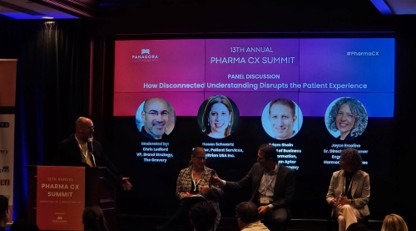
These ideas strongly resonated with Noble’s own perspective, particularly those raised during How Disconnected Understanding Disrupts the Patient Experience, a panel featuring Adam Shain, Vice President and Head of Business Transformation at Noble, alongside leaders from Celltrion USA and Harmony Biosciences.
CX Is the Strategy, Not the Output
Noble’s Bo Thompson was onsite to capture how CX has become the journey that leads to a treatment decision, not a collection of disconnected touchpoints.
Across PanAgora sessions, speakers cautioned against mistaking activity for progress. Adding more campaigns, channels, or programs does not automatically improve experience. In fact, without clear outcomes and alignment, it often creates what Bo described as “busy metrics and empty insights.” True CX leadership is measured by reduced friction, better outcomes, and experiences that support patients and providers at moments that matter most.
From Omnichannel to Optichannel Execution
A major shift discussed at the summit was the move away from calendar-based engagement toward signal-based execution. Rather than being everywhere all the time, leading organizations are focusing on precision. Short, targeted engagement windows driven by real-world signals are outperforming broader omnichannel efforts.
This evolution recognizes that execution excellence matters more than channel proliferation. Measurement, too, must mature beyond clicks and impressions to focus on behaviors, persistence, and real outcomes. These principles mirror how Noble approaches patient onboarding and training experiences, designing interactions to be timely, relevant, and supportive rather than overwhelming.
Closing the Understanding Gap Inside Organizations
Adam Shain’s panel addressed a challenge at the heart of modern patient experience: patients do not experience channels, hubs, or portals. They experience moments. Hearing a diagnosis. Opening an insurance letter. Paying for treatment. Starting or stopping therapy.
When understanding breaks down inside organizations between commercial, medical, market access, and support functions, those moments are disrupted. Internal silos, misaligned incentives, and fragmented data show up externally as confusion, anxiety, and abandonment.
Adam emphasized that improving CX starts with shared understanding. When teams align around what patients are actually navigating, insight can be translated into experiences that meet individuals where they are, not where internal structures assume them to be. That alignment requires trust, collaboration, and a willingness to design around human realities instead of organizational convenience.
Human and Digital Must Work Together
AI and advanced analytics were present in nearly every PanAgora conversation, but with an important caveat. Technology only accelerates what already exists. Poor data, siloed teams, and misaligned incentives are magnified by AI rather than solved by it.
Bo’s executive brief reinforced that the most effective models use AI to inform and guide human action, not replace it. Field teams, care teams, and patient services remain critical trust builders, particularly in rare disease and specialty care where emotional and practical stakes are highest. Digital succeeds when it adds clarity, reduces burden, and supports quality of life.
Trust Is the Ultimate Currency in Patient Experience
Another consistent message across the summit was the central role of trust. Trust must be built upstream, often before a prescription is written. Consistency, reliability, and usefulness matter far more than novelty. While AI can strengthen trust when used transparently and responsibly, it can just as easily erode it if deployed without empathy or purpose.
This perspective aligns closely with Noble’s focus on designing experiences that patients can rely on when confidence and understanding matter most.
Noble’s Takeaway: Alignment Enables Better Moments
Coming out of PanAgora, the message was clear. CX transformation is not about more tools or more activity. It is about aligning people, processes, and insights around the moments that shape patient experience.
Adam Shain’s panel underscored that closing gaps in understanding inside organizations is one of the most powerful ways to improve what patients experience outside them. Bo Thompson’s takeaways reinforced that CX succeeds when it is treated as a strategy, executed with discipline, and grounded in empathy.
At Noble, these principles continue to guide how we help life science organizations design onboarding, training, and engagement experiences that remove friction, build confidence, and ultimately support better outcomes for patients and caregivers alike.