



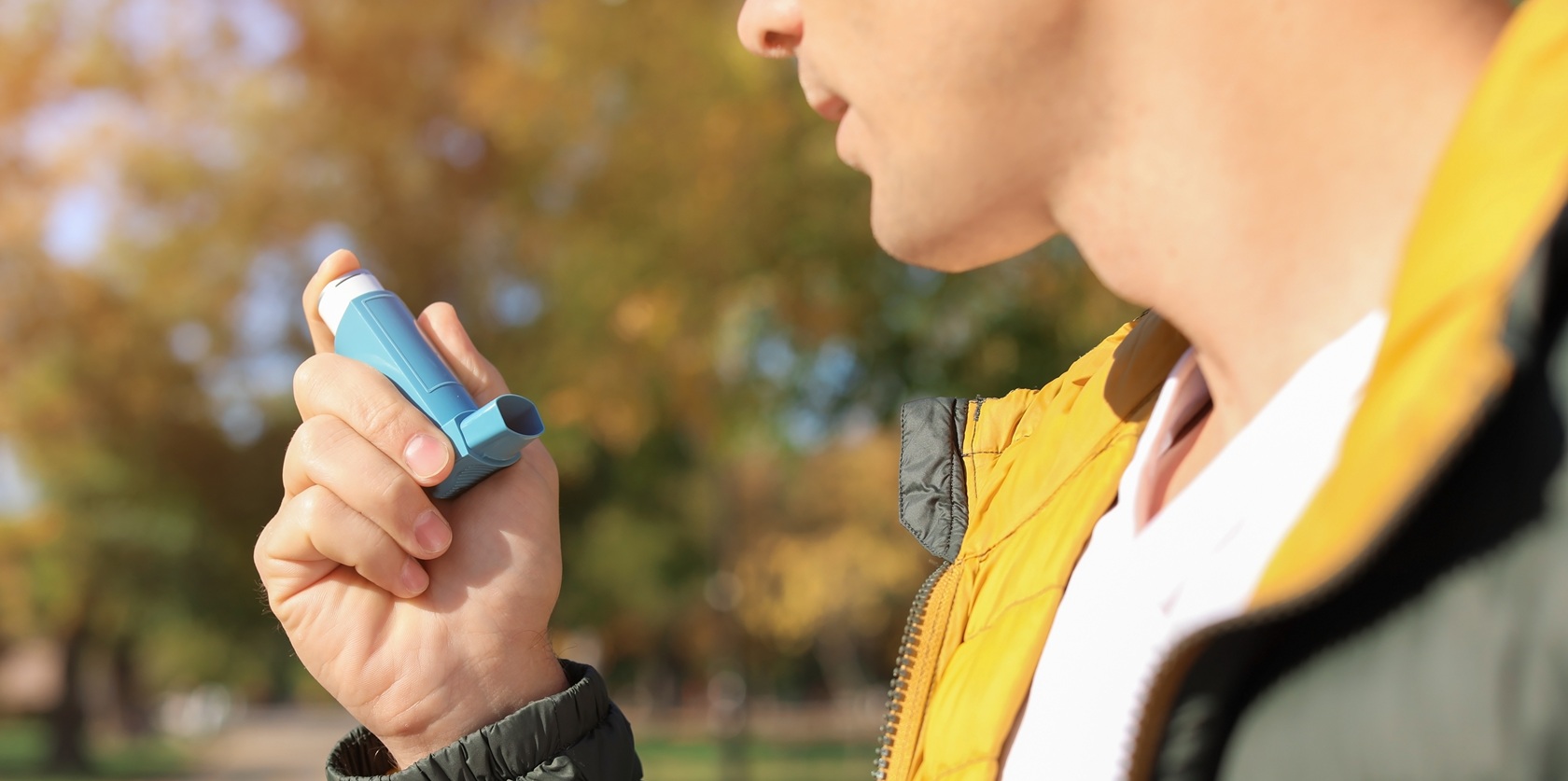
As sustainability goals reshape the pharmaceutical industry, much of the conversation has focused on materials, propellants, and emissions. In respiratory drug delivery, the transition to low global warming potential (low-GWP) propellants is a prime example of this shift, with the potential to significantly reduce the environmental impact of pressurized metered-dose inhalers (pMDIs).
A recent Aptar Pharma publication, Low GWP pMDIs: Evolving a Proven Inhaler Platform for Sustainability, explores how this transition is driving innovation across inhaler design, formulation, and manufacturing.
But beneath the technical advancement lies a critical question that is often overlooked:
What does this evolution mean for patients?
At Noble, we believe sustainability-driven change is not just an engineering challenge. It is a human factors challenge.
When Devices Change, Behavior Must Change
Sustainability improvements in device design do not occur in isolation. As highlighted in Aptar Pharma’s publication, the shift to low-GWP propellants introduces system-level changes across the entire inhaler platform, from formulation to device performance.
For patients, these changes may translate into:
- Variations in spray force or timing
- Differences in device feel or feedback
- Subtle shifts in technique required for proper use
While these differences may be technically necessary, they introduce variability into a process that depends heavily on consistency. For respiratory therapies, where timing, coordination, and technique directly impact drug delivery to the lungs, even small differences can affect outcomes.
This is where human factors design becomes essential.
Designing for real-world use means understanding that patients do not interact with devices in controlled environments. They rely on memory, habit, and familiarity. When those expectations are disrupted, the risk of use errors increases.
Continuity of Care Depends on Usability
For decades, pMDIs have been trusted by patients because they are familiar, reliable, and easy to use across a wide range of populations. This familiarity is not incidental. It is a key part of their effectiveness.
As the Aptar Pharma article reinforces, efforts to improve sustainability are focused on evolving the platform rather than replacing it, in part to preserve patient familiarity and continuity of care.
From a human factors perspective, continuity of care is not just about maintaining therapeutic equivalence. It is about ensuring that patients:
- Recognize how to use the device
- Feel confident in their technique
- Trust that the device will perform as expected
If a patient loses confidence, adherence can decline. If technique changes are not fully understood, efficacy can suffer.
In other words, the success of sustainable innovation depends on whether patients can successfully use the device in their daily lives.
The Hidden Risk of Innovation
Innovation often focuses on what is possible. Human factors focuses on what is usable.
As new propellants and inhaler systems are introduced, the risk is not just technical complexity. It is user misunderstanding.
Even well-designed devices can create challenges if:
- Instructions differ from what patients previously learned
- Training materials are outdated or insufficient
- Subtle differences are not clearly communicated
These gaps are where real-world issues emerge. They are also where patient outcomes can be compromised.
This is why integrating human factors early in development is critical. It ensures that device evolution does not unintentionally introduce barriers to effective use.
Supporting Patients Through Transition
Sustainable innovation will continue to drive change across drug delivery systems. As it does, supporting patients through that transition becomes just as important as the innovation itself.
The Aptar Pharma publication highlights the importance of maintaining patient confidence as inhaler technologies evolve. [
Effective support requires more than instructions for use. It requires:
- Human-centered design that prioritizes intuitive interactions
- Formative and summative HF studies to validate usability
- Training strategies that reinforce proper technique
- Onboarding experiences that build confidence from the start
At Noble, we focus on bridging the gap between device design and real-world use. Our approach ensures that as delivery systems evolve, patients are not left behind.
Because even the most advanced drug delivery technology can only deliver value if it is used correctly.
Designing for a Sustainable and Usable Future
The transition to low-GWP inhalers represents an important step forward for the industry. It demonstrates that sustainability and innovation can go hand in hand.
But to fully realize that value, we must expand the definition of success.
It is not enough to develop a more sustainable device. We must also ensure that it works for the people who rely on it every day.
That means designing with patients in mind from the very beginning.
It means recognizing that usability is not secondary to innovation. It is central to it.
And it means understanding that the future of drug delivery will be defined not only by what we build, but by how effectively patients can use it.