


Beyond the Device: Key Takeaways from PDA PFS 2026
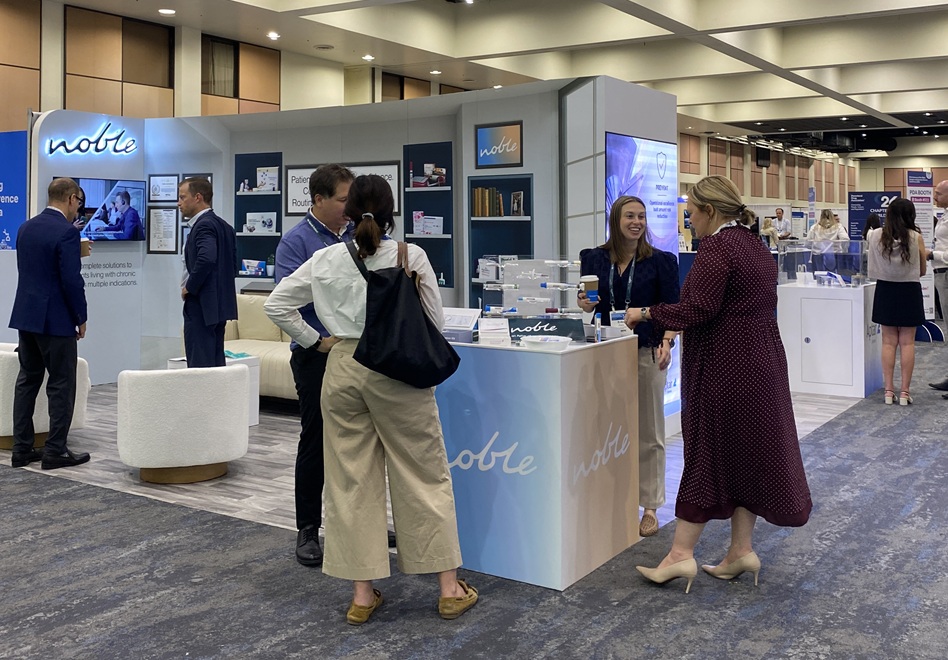
The 2026 PDA Universe of Pre-Filled Syringes and Injection Devices Conference brought the drug delivery community together in Palm Springs around the theme, “Where Molecules Meet Devices: Advancing Patient-Centric Solutions.” Across the program, the intersection of drug delivery, device development, combination products, technology and user experience was front and center.
For Noble, an Aptar Pharma company, the event reinforced an important idea: innovation does not end when a drug delivery device is designed. The experience continues when that device reaches the hands of a patient.
As more therapies move beyond traditional clinical settings and into the home, pharmaceutical organizations have an opportunity to think more broadly about what successful drug delivery really means.
Here are several of our key takeaways from PDA PFS 2026.
1. The Patient Voice Belongs at the Beginning of the Conversation
One of Noble’s highlights at PDA PFS was the opening keynote session focused on patient-centered innovation and the transition to home.
Joe Reynolds, Noble Head of User Experience Services, joined the program alongside a patient living with ulcerative colitis who shared his firsthand experience with biologic self-injection and multiple autoinjectors. The Noble portion of the session centered on the transition from clinic-based care to self-administration at home.
That format was intentional.
Rather than discussing patients only through research findings or design requirements, the session brought a real patient experience directly into an industry conversation about drug delivery.
The discussion also continued beyond the keynote. Noble invited attendees to Booth #411 to engage with the patient panelist and hear firsthand perspectives on living with chronic therapy, transitioning to home-based treatment, self-administration, and what patients need to feel confident and successful.
For Noble, the takeaway is clear: patient needs should not simply validate a solution at the end of development. They should help inform decisions throughout the journey.
2. The Transition to Home Changes What “Success” Looks Like
The shift toward home administration was an important part of Noble’s contribution to the conference conversation. Noble’s keynote content specifically addressed transitioning care from the clinic to the home and the experience of self-administering a biologic.
Moving therapy into the home changes the context of use.
Patients may be taking on responsibilities that were previously supported by healthcare professionals. That makes considerations such as usability, education, onboarding, training and continued support increasingly important.
Noble’s pre-event communications emphasized this point, positioning human factors, patient education, training and ongoing support as ways manufacturers can address barriers associated with self-administration and help patients build confidence managing therapy independently.
The implication for drug delivery teams is important: the device cannot be considered separately from the experience required to use it successfully.
3. Large-Volume Delivery Is Putting New Focus on the User Experience
Another topic that generated significant interest at PDA PFS was large-volume drug delivery, both throughout the conference and in conversations with colleagues at the show.
As the industry explores new approaches for delivering larger-volume therapies, the conversation increasingly extends beyond what a delivery system can technically accomplish to what that experience means for the person using it.
For patients, that puts greater emphasis on understanding how a therapy fits into treatment routines, how intuitive the delivery experience feels, and what education and support may be needed to build confidence. For healthcare professionals, it raises equally important questions around how patients are introduced to new delivery approaches and prepared for successful use.
From Noble’s perspective, this reinforces the importance of bringing human factors and the voice of the user into the development process early. As drug delivery technologies evolve, understanding the needs, behaviors and expectations of both patients and healthcare professionals will be critical to creating experiences that work beyond the device itself.
The opportunity is not simply to enable larger-volume delivery. It is to make that delivery experience work for the people who ultimately depend on it.
4. Patient Experience Is a Continuum, Not a Single Touchpoint
Another takeaway from the event is closely aligned with Noble’s broader patient engagement strategy.
Noble’s presence at PDA PFS was deliberately positioned around an end-to-end story, beginning with human factors and user experience and extending into training and patient engagement.
That reflects a larger opportunity for pharmaceutical organizations.
A patient’s experience is shaped by a series of connected moments: understanding the user’s needs, interacting with a device, learning how to use it, taking the first dose, building confidence and receiving support throughout therapy.
Noble’s patient ecosystem reflects that continuum through UX research and insights, device selection and human factors, training devices and kits, patient onboarding with Noble SureStartRx™, and the use of real-world insights to help inform ongoing improvements.
When those experiences are considered together rather than independently, the focus shifts from simply delivering a device to supporting a patient journey.
5. Integration Matters as Therapies and Experiences Become More Complex
The conversations coming out of PDA PFS also reinforce an idea Noble has been exploring more broadly: supporting successful therapy launches requires alignment across disciplines.
Noble’s recent Integrated Advantage work addresses the challenges created when human factors, training, content development, manufacturing and patient engagement are managed through fragmented partners. The report instead explores a connected model intended to reduce friction, align stakeholders and create continuity from development through deployment.
That thinking fits naturally with what PDA itself emphasized this year. The official conference description positioned PDA PFS at the convergence of science, technology and user experience, with sessions addressing challenges and opportunities across the drug delivery lifecycle.
For Noble, integration means connecting patient insight with the strategies and solutions that follow it, rather than treating human factors, device experience, training, onboarding and engagement as isolated activities.
From Drug Delivery Innovation to Patient Success
PDA PFS 2026 showcased an industry continuing to advance the science and technology behind injectable drug delivery. But one of the most important questions remains remarkably human:
What will this experience actually be like for the patient?
For Noble, that question connects everything from early human factors research and device experience to training, onboarding and ongoing patient support.
The goal is not simply to help bring another drug delivery system to market. It is to help create an experience that gives patients the understanding, skills and confidence they need when that innovation reaches them.
And as more therapies transition from the clinic to the home, that connection between device innovation and patient experience will only become more important.